One Outfit, Three Ways: The NYC Capsule Wardrobe Hack Every Working Woman Needs
Last time, I gave you the three power dresses currently running my styling calendar. The response was loud — but so was one specific comment I kept getting in my DMs: “Love this, but I’m not really a dress girl. What do I do with pants?”
Fair question. And honestly, overdue for its own post.
So here’s the separates edition. Same city, same unpredictable weather, same job to do — just built around a trouser instead of a hemline. The premise is simple: one pair of trousers, one fitted top, one belt, one pair of heels, and three completely different layers on top that take you from a stand-up meeting to a client dinner without a second thought. If the dress guide was your Monday-Wednesday-Friday, this is what fills in the gaps.
Why Separates Deserve Equal Real Estate in Your Closet
Dresses are a one-decision outfit — put it on, done. Trousers ask a little more of you, but they pay it back tenfold in flexibility. A great trouser doesn’t care if you spilled coffee on your top before your 9 a.m.; you change the shirt, not the whole outfit. It doesn’t care if the meeting moved from the 68-degree conference room to a rooftop client lunch; you add or remove a layer. In a city that changes its mind four times before noon, that kind of built-in adaptability is worth more than almost anything else in your closet.
This is also the exact philosophy behind The Power Office Look — dressing for range, not for a single moment. Separates are just the purest version of that idea.
The Formula: One Trouser, One Tee, Three Entirely Different Days
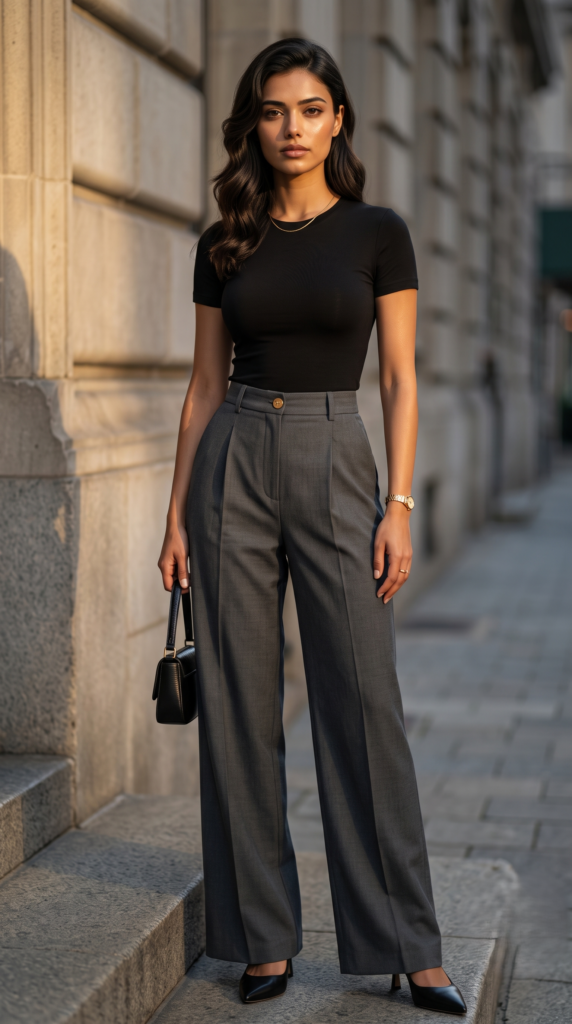
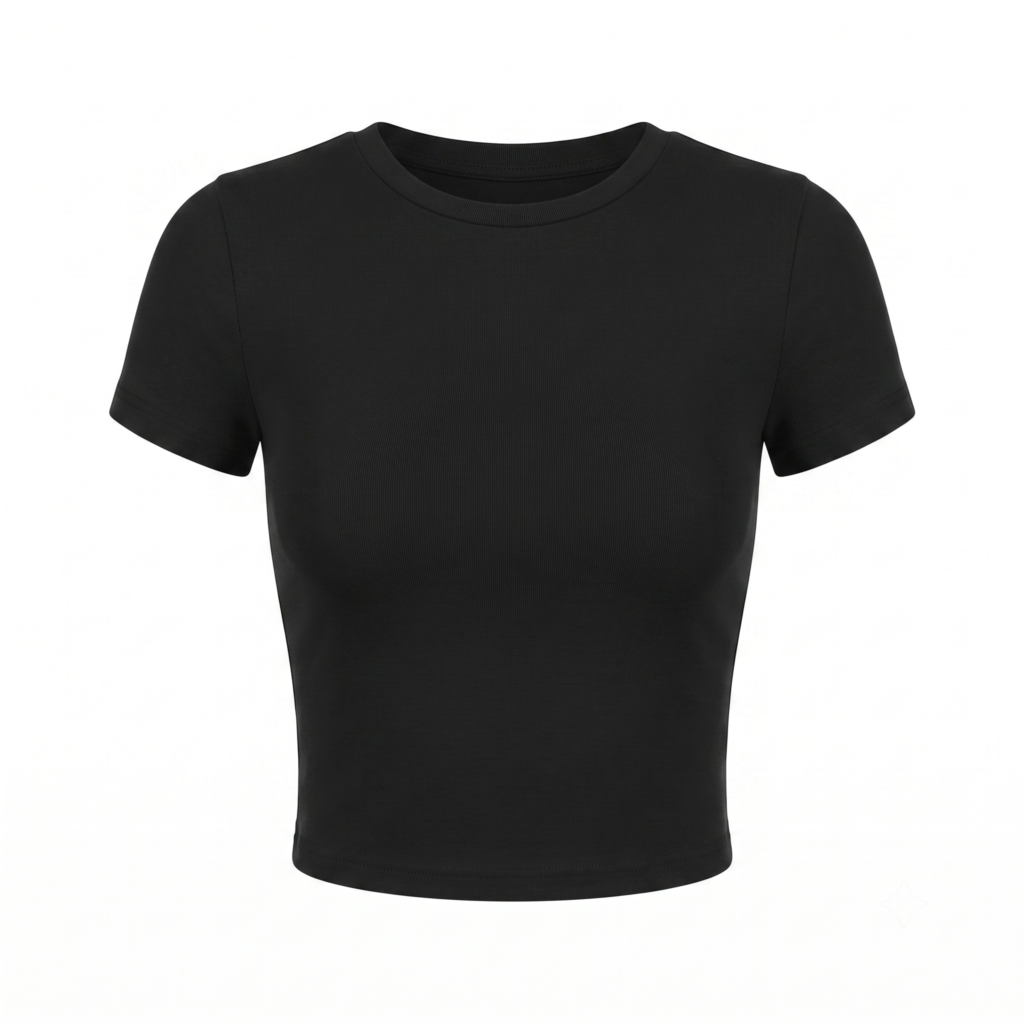
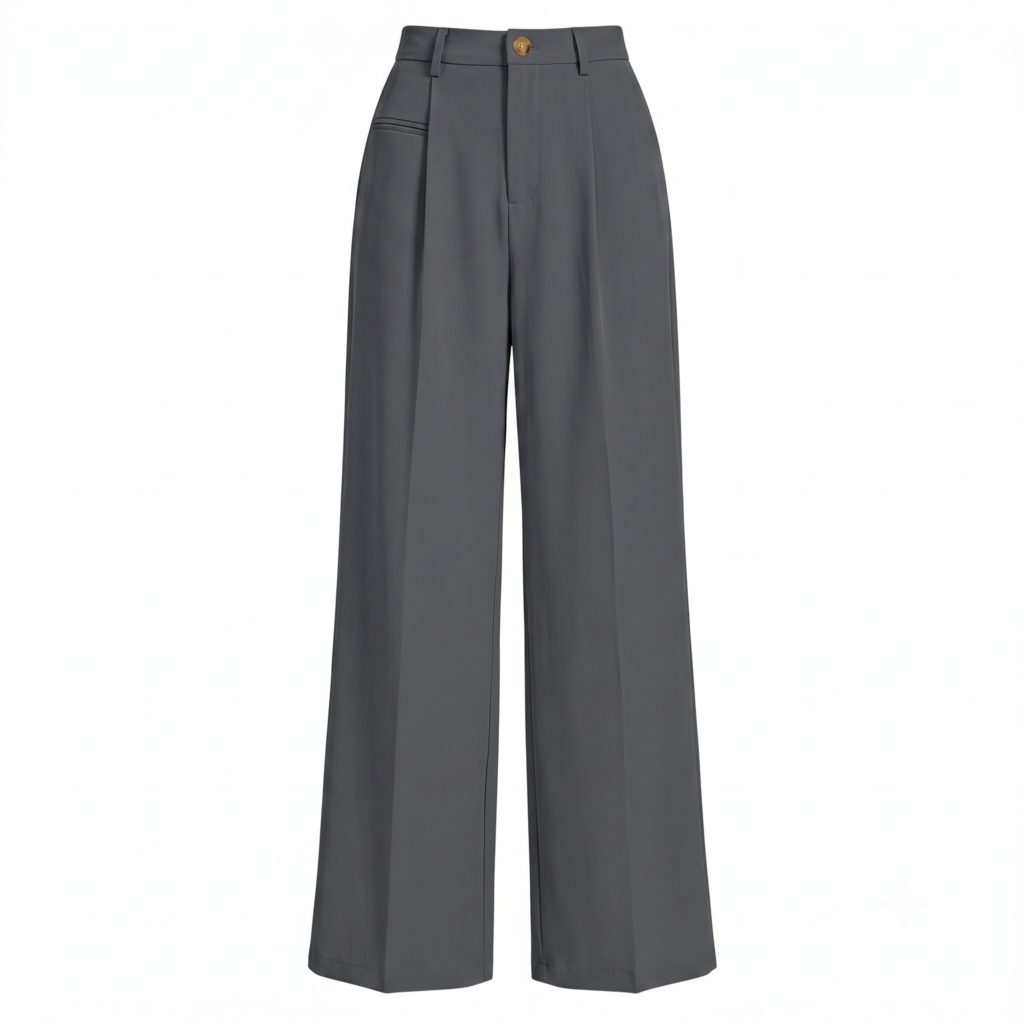
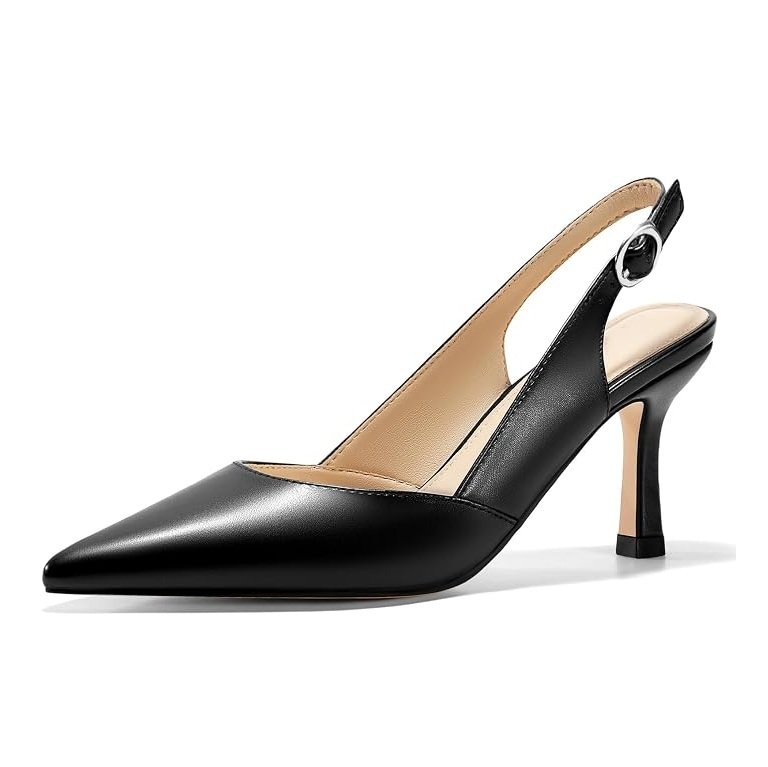
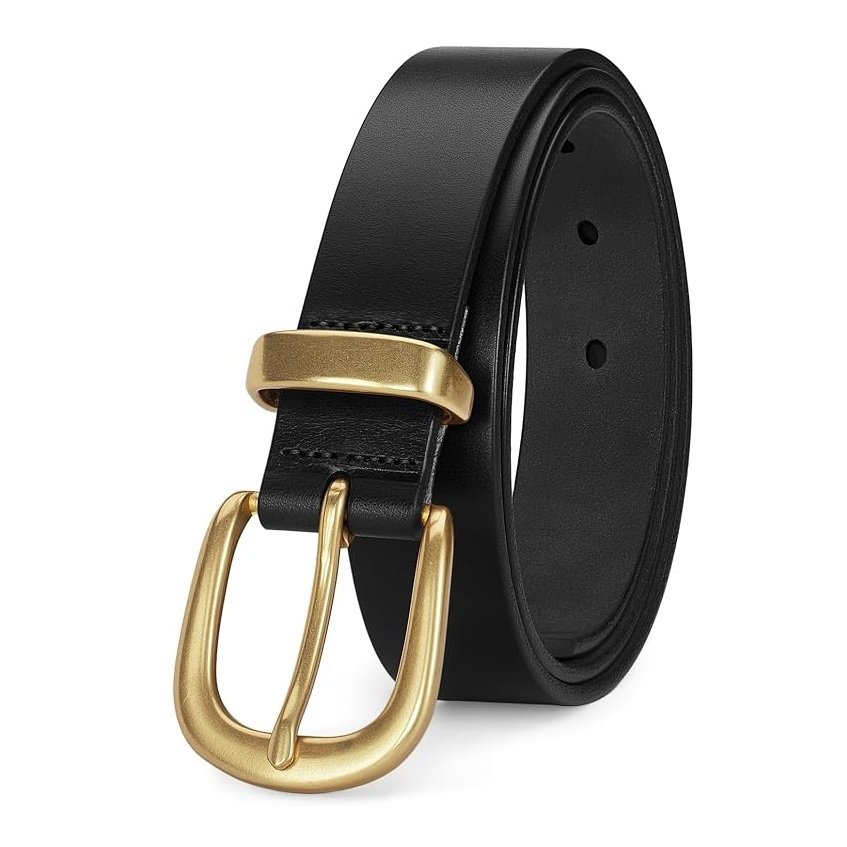
The foundation is deceptively simple: charcoal grey wide-leg trousers, a black fitted crew-neck top, a slim black belt, and pointed black pumps. That’s it. That’s the whole starting point.
Shop on Amazon
Look One: The Ivory Blazer
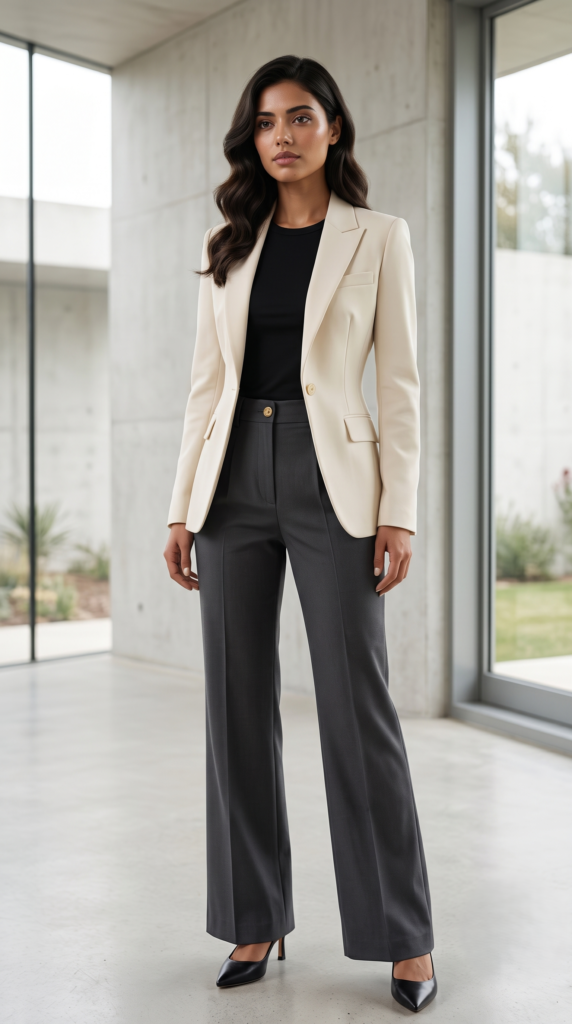
Layer an ivory single-breasted blazer over the base and the whole outfit shifts register — this is your walk-into-the-room-and-be-taken-seriously layer, minus the harshness of straight black or navy.
If you want the deeper dive into why this ivory-forward, quiet neutral palette is having a moment, I got into it more in Quiet Luxury Office Outfits: 6 Old-Money Work Looks to Wear in 2026.
Best for: Client pitches, panel days, first-week-at-a-new-job energy.
Shop on Amazon
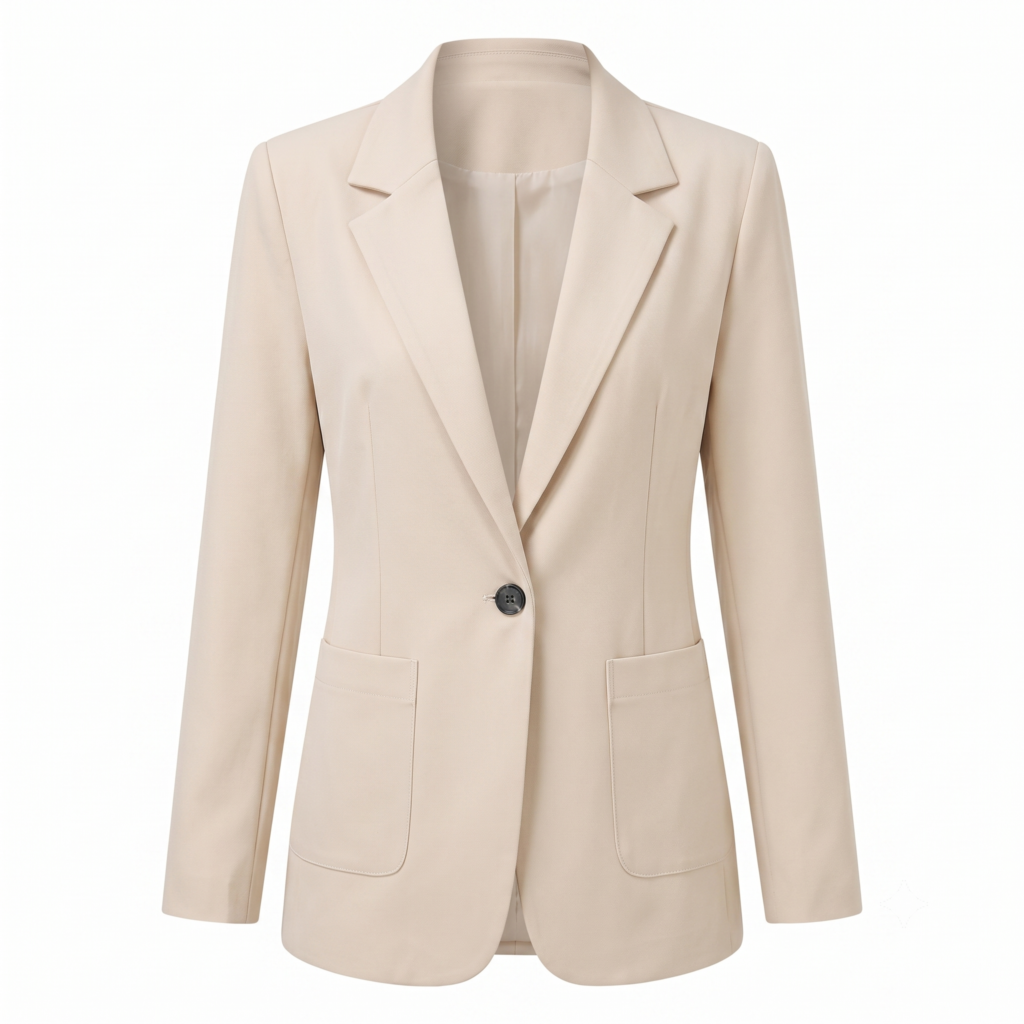
Slim Blazer
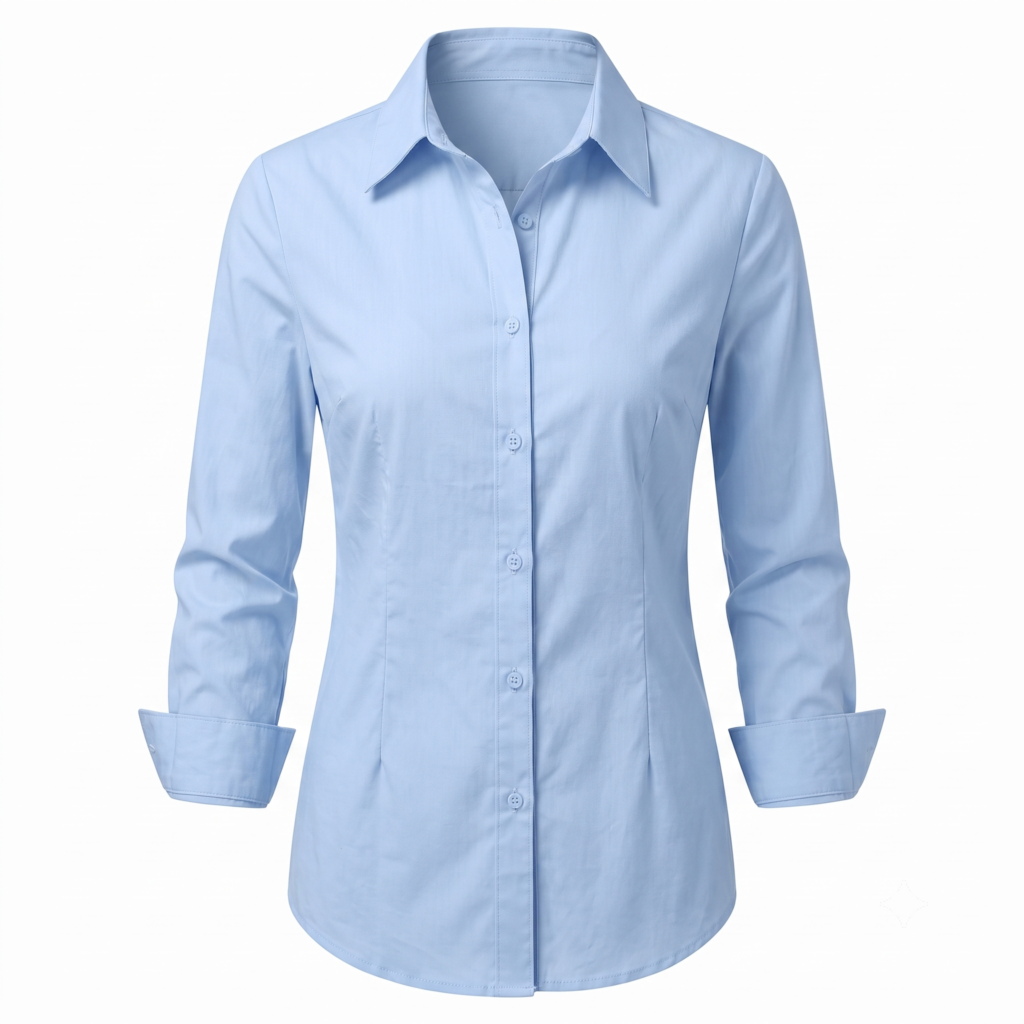
Look Two: The Open Blue Shirt
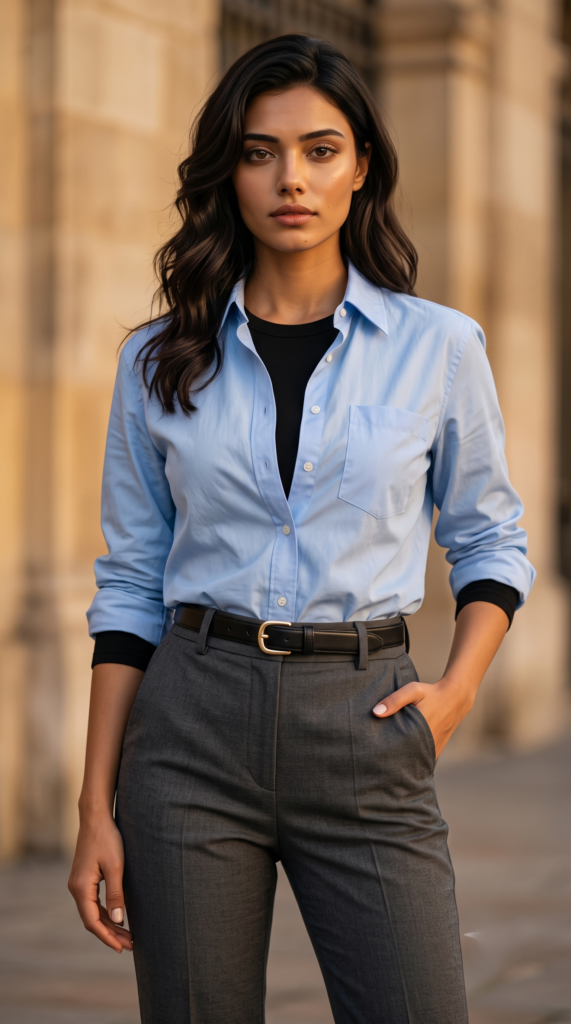
Swap the blazer for a light blue button-down worn open over the top, sleeves rolled, belt still visible underneath. This is the layer for the days that don’t need a statement — just polish that doesn’t try too hard.
Best for: Hybrid office days, coffee meetings, days you’re commuting straight into travel — this exact layering move is one I reach for constantly on trip days too, which I get into more in my airport outfit edit.
Shop on Amazon
Look Three: The Camel Coat
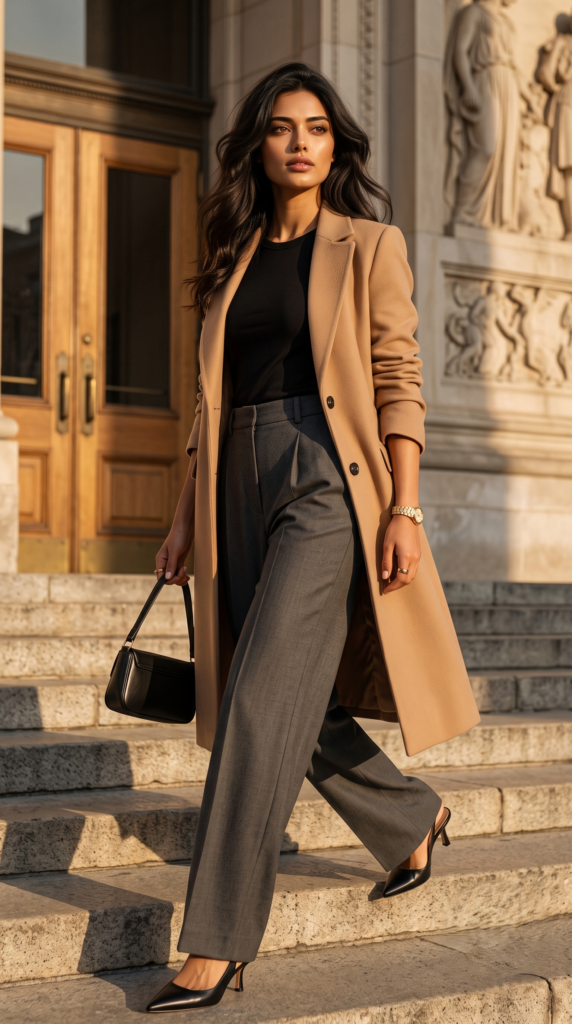
This is the one I get stopped for. A long, structured camel coat over the base, a sleek black shoulder bag, a simple gold watch — this is your commute look, full stop.
Best for: The actual commute, after-work drinks straight from the office, any day you want main-character-walking-to-the-subway energy.
Shop on Amazon
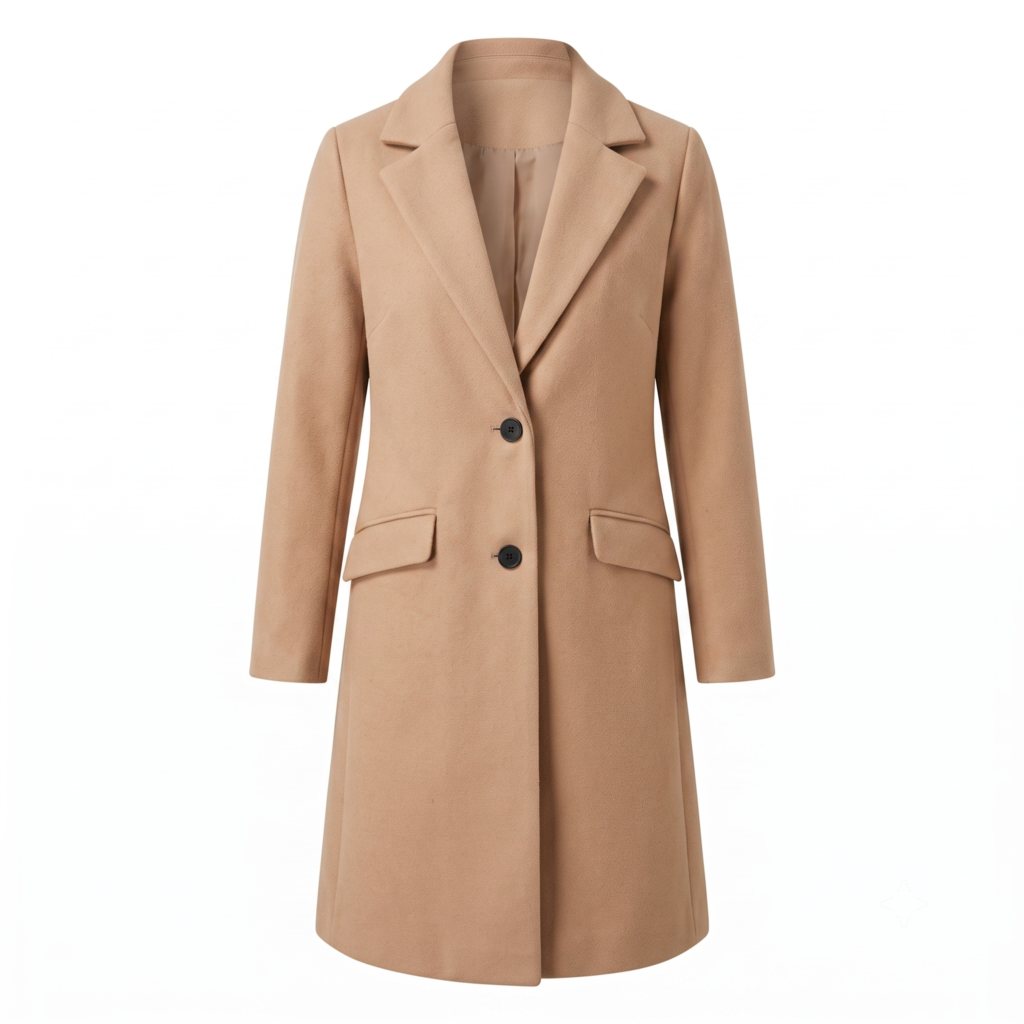
Camel Coat
Finishing Touches
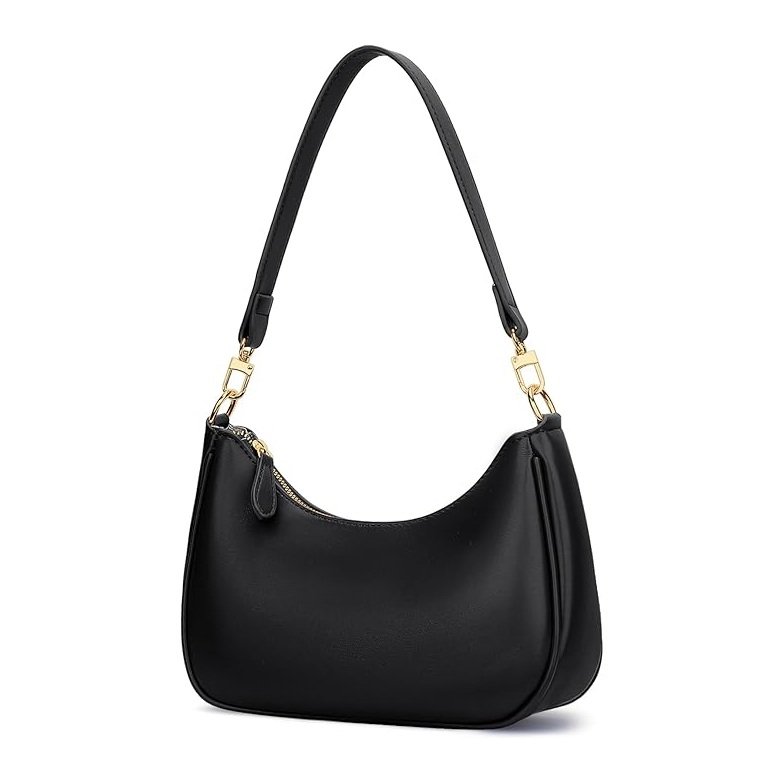
One structured black bag across all three looks keeps everything grounded — it shouldn’t have to compete with whatever’s on top. Gold jewelry, kept minimal, warms up the grey-and-black base without stealing focus. And don’t sleep on a clean manicure — it’s doing more work in client meetings than people give it credit for. I rounded up some good low-effort options in the spring nail edit if you need a refresh.
Layering Separates Through a New York Year
Trousers and tops give you more seasonal flexibility than a dress ever will, because every layer is removable on its own timeline:
- September–October: The blue shirt does most of the work here — mornings are cool enough for it alone, and it layers cleanly under the blazer once the afternoon wind picks up.
- November–February: The camel coat becomes non-negotiable. Layer the blazer underneath on the coldest days rather than adding a bulky sweater — it keeps the silhouette clean.
- March–April: Back to the blazer as your main layer, shirt underneath for the mornings that still run cold.
- Office AC, year-round: Keep the blue shirt at your desk even in summer — unbuttoned over the fitted top, it’s the easiest fix for a freezing conference room without changing your whole outfit.
How This Pairs With Your Dress Rotation
If you’re building both edits into your closet, here’s how I’d actually run the week:
- Monday (relationship-building day) → the tweed dress from the Power Dress Guide
- Tuesday (heads-down day) → the base trouser look alone
- Wednesday (big meeting) → the pinstripe sheath, or Look One here if you’re not feeling a dress
- Thursday (hybrid/travel day) → Look Two, the open blue shirt
- Friday (office-to-evening) → the blazer dress, or Look Three if the weather says coat
Six pieces total — three dresses, three separates — and you’ve essentially built a two-week rotation without buying a single new thing after that. That’s the cost-per-wear math that makes investment pieces worth it.
One More Thing Before You Go
Not every day is a dress day, and it shouldn’t have to be. The best New York work wardrobes I’ve built for clients aren’t the biggest ones — they’re the ones where every piece already knows how to work with everything else. Build the trouser, build the top, and let the layers do the rest of the talking.
Save this one alongside the dress guide, and let me know which look becomes your Tuesday go-to. 🤍
Want outfit ideas like these in your feed every week? Follow along @itskia.v on Instagram and save this post on Pinterest for later.
Frequently Asked Questions
Is it okay to wear the same pair of trousers to the office multiple times a week?
Yes — this is essentially what a well-built work wardrobe relies on. As long as the trouser is a quality fabric that holds its shape and you vary what’s layered on top (a blazer one day, a button-down the next), no one clocks the repeat. It’s the top layer that changes the story, not the base.
What’s the actual difference between styling a blazer versus a long coat for the office?
A blazer is an indoor layer — it’s built for meetings, presentations, and staying on for most of the day. A long coat is strictly outerwear, meant to come off the second you’re at your desk. The mistake most people make is treating a blazer like a coat (too light for real cold) or a coat like a blazer (too heavy to sit in all day). Ideally your rotation has both.
Can I really wear the same button-down shirt every day if I style it differently?
Yes, and it’s one of the easiest wardrobe hacks there is. Buttoned to the collar and tucked reads formal. Left open over a fitted top with sleeves rolled reads casual. Worn on its own reads warm-weather office. Same shirt, three completely different outfits depending on how it’s worn.
Should my first work investment piece be a blazer or a coat?
If you only have budget for one right now, start with the blazer — it works indoors and out, across more seasons, and layers under a coat you buy later. The coat is the next purchase once the blazer’s already earning its keep.
How do I keep one pair of trousers from feeling repetitive at the office?
Change the top layer, the shoe, or the accessories — never all three pieces of the base at once. Swapping the blazer for a shirt, or the pump for a slingback, is usually enough to make the same trouser feel like a new outfit entirely.
What fabric weight works best for trousers you’ll wear year-round in New York?
A mid-weight wool blend is the sweet spot — heavy enough to hold structure and provide warmth from October through March, light enough to layer under without overheating you in an un-air-conditioned September office. Avoid anything too lightweight; it won’t hold a crease and reads less polished by midday.